The Guachinche Guide: Where Tenerife Really Eats
Guachinches in Tenerife (updated November 2026): what they are, the Decreto 83/2013 rules, when the season runs, named guachinches by area (La Matanza, La Victoria, Santa Úrsula, Tacoronte, La Orotava) with typical dishes, prices and cash-only warnings, and how to tell a real one from a restaurant using the name.
Quick Budget Guide
See breakdown
- Wine, ¼ litre (El Chupete) €2.50
- Garbanzas, full portion (El Chupete) €6.00
- Carne fiesta, full portion (El Chupete) €9.00
- Conejo frito, full portion (El Chupete) €16.00
- Chocos en salsa + cherne salado (Casa Nino) €28.50
- Starters, escaldón, sirloin, dessert and wine for 2 (La Gorgolana) €39
- Lunch for 4 (Casa Estela) about €62
- Lunch for 4, late-season (Guachinche José) €30
- Lunch for 5 (Don Trino) €90
- Tarta de queso (La Cernidera) €3.50
- Guided wine tour with guachinche meal (Sunbonoo, El Sauzal) €119 (4h) / €135 (6h) per adult
- Guachinche 6-hour gastronomic tour (TripAdvisor listing) from €82 per adult
- TITSA line 101 La Laguna - La Orotava fare not found in sources
# What Is a Guachinche? Season, Best Time to Go & Opening Days
Before you start pinning places on a map, it helps to know what you're actually looking for, because a guachinche isn't quite a restaurant and isn't quite a bar.
What Is a Guachinche in Plain English?
A guachinche is a small, informal place where a local grower sells his own wine, with simple home-cooked food on the side. The Academia Canaria de la Lengua defines it as a popular place serving typical food and vino del país. The word (also spelt bochinche) most likely comes from a peninsular Spanish term for a poor tavern, itself linked to buche, a swig.
You'll hear that it comes from the English "I'm watching you". That's a folk story, so enjoy it as colour but don't repeat it to a local.
The idea began with small growers selling surplus wine from a room or garage in the family home, while the winemaker's wife cooked a few tapas. They grew out of wine production, not restaurants. In the 1980s they were nicknamed de chochos y moscas (lupin seeds and flies), and they've been regulated since 2013.
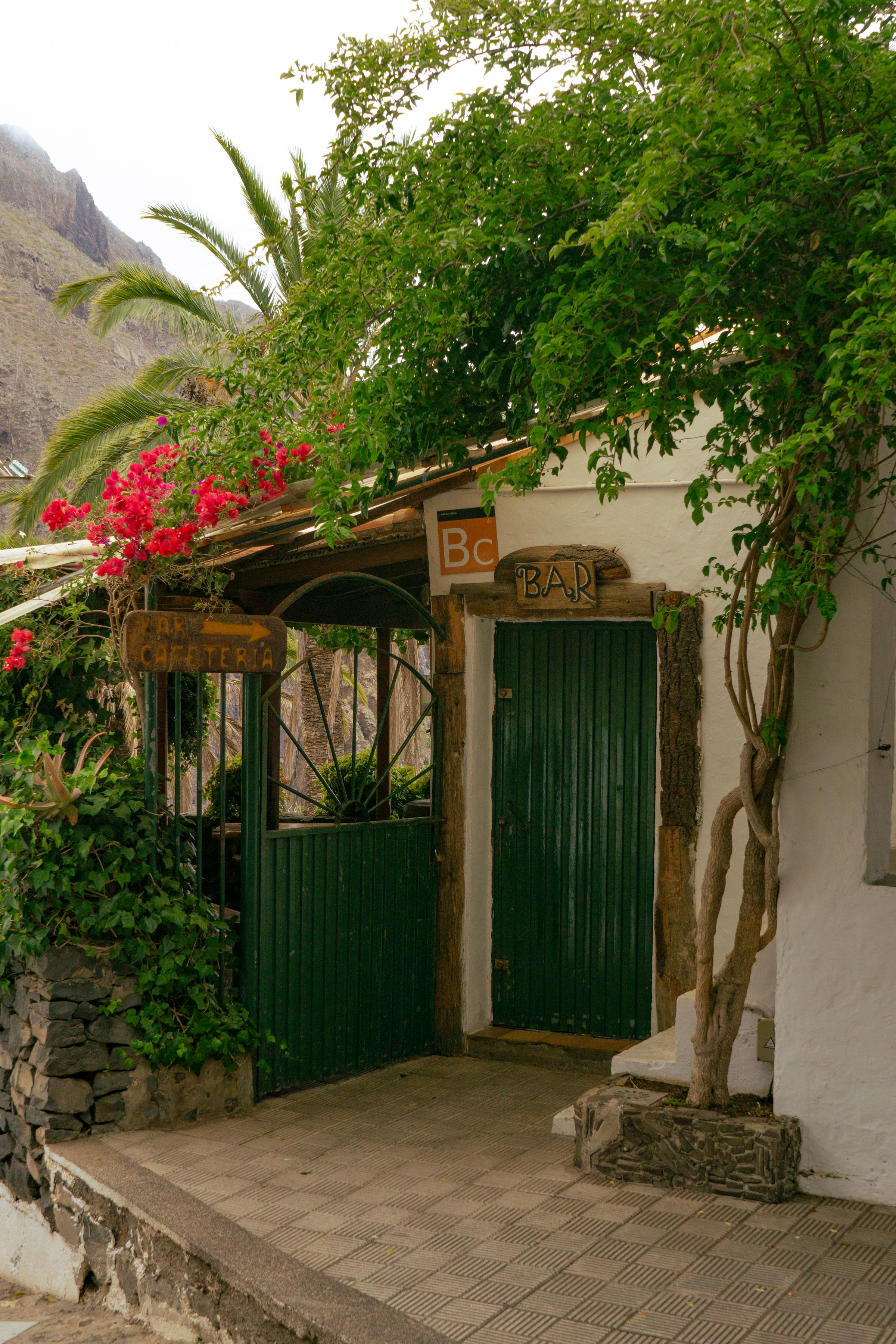
Expect a garage, ground floor or winery store, paper tablecloths, mismatched chairs and wine in a jug or clay jar. That scruffiness is the point.
What Is Vino del País?
Vino del país just means local wine. In a guachinche it's usually a young red from the latest harvest, mostly from Canarian grapes.
- Listán Negro: dominates in the north and gives fresh, light-bodied reds.
- Negramoll: the other common red.
- Listán Blanco: the main white grape.
House wine normally comes unlabelled, so it isn't sold under a DOP name. You pay by the jug or bottle for what you drank. Ordering vocabulary and prices are in What to Order, What It Costs & Guachinche Etiquette.
Where Are the Guachinches in Tenerife (and Where Aren't They)?
They follow the vineyards, which means the green, wetter north. An autumn 2026 snapshot on guachincheando.com listed 136 guachinches across 21 municipalities: 91 in the north, 26 in the metropolitan area and 19 in the south. Those counts include restaurant-style places, so the truly traditional number is lower. If you're staying in the south, expect to head north.
By municipality, the same snapshot listed:
- La Orotava: 23
- Santa Úrsula: 17
- La Victoria: 14
- La Matanza: 12
- Tacoronte: 10
- Los Realejos: 7
- El Sauzal: 4
- Icod: 4
There are two main wine zones. Tacoronte-Acentejo was the Canaries' first Denominación de Origen (1992), a 23 km strip on the northern slope between El Rosario and Santa Úrsula. The Gobierno de Canarias puts its cultivated area at 1,583 hectares. La Matanza and La Victoria are its heart, with the most guachinches per square kilometre.
Valle de la Orotava DOP (1995) is the smaller of the two. There's a second, smaller cluster around Icod and San Juan de la Rambla. Named places for both zones are in the two area sections.
When Is Guachinche Season in Tenerife?
Tradition starts the season on San Andrés, 30 November, when the new wine, chestnuts and sardines come out. In practice every house sets its own dates.
Most traditional houses open from around November and close around March. Some stretch to June or July and others shut in January. The general window is November to March, though the decree caps each registered house at four months a year, so few are open the whole stretch.
A few open early. Guachinche Las Galanas (Los Realejos) had reopened by 21 October 2026, and Suso el Pintor (Santa Úrsula) was described as the only authentic traditional guachinche open in September 2026. Others run short: La Chaotera (La Orotava) opened in early November 2026 and expects only about 2.5 to 3 months, and Casa Elena opens just a few weeks a year because the wine runs out.
End dates are just as personal. Guachinche José (El Tejadito, La Victoria) announced a 26 January closure in January 2025, and Bodega Zacatín announced a 2 June closure in 2024 to focus on the harvest.
Here's the bit that catches people out. Most guachinches close on 24, 25 and 31 December and 1 January, even in peak season.
Best Time to Go: Months, Days and Time of Day
Months: November to March gives you the widest choice, and December to February is the safest bet for finding the new wine flowing. Go in late spring and you're gambling.
Days: Friday to Sunday almost everything is open. Guachincheando counts 120 guachinches open on a Friday, Saturday or Sunday. Midweek, about half are closed.
Some are weekday-only, which wrecks weekend plans. La Huerta de Ana y Eva and Guachinche Ramón both close on Saturday and Sunday.
Time of day: lunch is the strong moment, and many places don't serve dinner at all. Turn up at 13:00 or just after. At La Huerta de Ana y Eva a queue forms from about 14:00, so don't leave it late. Checking who's open on the day is covered in How to Find Out Which Guachinches Are Open Right Now.
# Getting There: Driving, TITSA Bus 101 & Guided Tours
Once you know when you're going, the next question is how to get up there. For most people the answer is a hire car, but it isn't the only option.
Driving the Northern Wine Belt
Most traditional guachinches sit in the north along the TF-5 corridor: La Matanza, La Victoria, Santa Ursula (La Corujera) and the Orotava valley. Many are up narrow rural lanes a couple of kilometres above the village, which is why a car makes life much easier. The belt is compact: Santa Ursula is 6km from Puerto de la Cruz and 24km from Santa Cruz.
Staying in the south? Allow about an hour's drive up. Make a day of the north around the meal rather than driving up only to eat, and remember the wine: Spain's drink-drive limit (0.25 mg/l) arrives quickly over a long guachinche lunch, so sort a designated driver, taxi or tour before the first jug.
By Bus: TITSA Line 101
Line 101 runs La Laguna (Intercambiador) along the TF-5 through Tacoronte, La Matanza, La Victoria and Santa Ursula to La Orotava, about an hour end to end, every 20-40 minutes from early morning. The catch: stops are on the main road and many guachinches are a steep walk above it, so check the distance before relying on the bus, or ask a taxi driver for a price when booking.
# How to Find Out Which Guachinches Are Open Right Now (Apps, Instagram & Phone)
Once you know roughly when the season runs (there's more on that in What Is a Guachinche?), the real question is whether your chosen place is serving today. There's no single master list, so locals cross-check two or three sources.
Which app or website shows open guachinches today?
Start with guachincheando.com. It lists 136 Tenerife guachinches with daily hours, opening-day filters and alerts. In its autumn 2026 snapshot it showed 49 open today and 120 open Friday to Sunday. It also flags changes, for example "ha cambiado su horario" on a house that had dropped Thursdays.
The rest, in rough order of usefulness:
- Guachinches Modernos / Dónde Comer Canarias: iOS and Android apps with video visits. It also covers restaurants, and its "traditional" category had only 23 entries, many marked "Horario sin confirmar".
- Guappchinche (iOS): has an "open now" filter, ratings and a phone number. Its last changelog entry I saw was 27/04/2025, so don't trust it blindly.
- guachinches.info: 63 Tenerife localities with an "abiertos hoy" view.
- guachinchestenerife.com: "Ahora abierto" labels.
- guachinches.es: marks "Traditional" versus "Modern".
Skip the old Android apps Guachi (last updated 2020) and Guachapp (early 2010s). Tenerife Weekly and Local Tenerife also run English-language reopening news in autumn, handy for spotting who's back.
Do guachinches post opening status on Instagram and Facebook?
Many use their bio as the open/closed sign. Bodega Zacatín (@bodegaelzacatin) posts hours and a phone number, La Gorgolana (@guachinchelagorgolana) puts "Abierto" in its bio, and La Bodega in Santa Úrsula posts "Abrimos de jueves a lunes" on Facebook. Check the latest post, not just the bio.
Why do guachinche opening hours disagree?
Because owners change days on a whim and directories rarely catch up. Casa Nino appears as Thursday to Sunday 11:30-17:30 on one site and Wednesday to Sunday 12:00-17:00 on another. Bodega Zacatín's Instagram says Friday and Saturday until 20:00, while TripAdvisor and guachinchestenerife.com say 22:00.
The rule is simple: a phone call is the only reliable check. Each authorised operator is supposed to tell the Cabildo de Tenerife its yearly opening and closing dates, but I couldn't find a public online list. See Real Guachinche or Restaurant? for the plaque side of things.
Nothing open? Fallbacks and the south
If the apps disagree and nobody answers, try another house in the same village. Neighbouring guachinches often open on different days, and the north is dense enough that you'll usually find one (see the area sections).
The south is thinner. guachinchestenerife.com lists places in Candelaria, Granadilla de Abona, San Miguel de Abona, Adeje, Arona, Güímar and Guía de Isora. I haven't confirmed any as traditional, meaning own wine and seasonal, so ring first. One car-rental guide says the most traditional experience is still in the north.
# Best Guachinches in La Matanza, La Victoria & Tacoronte (Tacoronte-Acentejo Heartland)
Once you know the season and how to check who's open (the checking section covers that), the Tacoronte-Acentejo belt is where you put it to use. This is the wine heartland, and it's where the smaller, scruffier, more genuine places tend to be.
Which Guachinches Are Open in Tacoronte-Acentejo Right Now?
As of mid-November 2026, only Casa Pepe has a fresh reopening report (Tenerife Weekly, 12 November 2026). Every other place below is confirmed to exist but not confirmed open, so phone first. Most of these close the moment the wine runs out. Where sources disagree, I've said so.
Best Guachinches in La Matanza de Acentejo
Casa Elena (El Colgaiso)
C/ San Cristóbal 72, tel 922 57 80 98. It's billed as Tenerife's first guachinche (a Guachinches Modernos claim, repeated by Diario de Avisos in December 2025). Come for rancho (Canarian stew), cazuela de cherne, escaldón and an unusual goat dish. It's small and made for a slow lunch.
It only opens a few weeks a year because of the wine, so ring ahead. Guachinches Modernos says no card machine and no parking, while guachinches.es lists a covered terrace and dogs allowed. Price is murky: Atlántico Hoy's headline says a meal for under €30, but doesn't say per person or per table. One ticket shows €60 for rancho, goat with asadura, cherne casserole and escaldón, with the number of diners not stated.
El Parralito
C/ San Cristóbal 66, on the same street as Casa Elena, tel 822 09 18 24. It's a ground-floor house guachinche with 7-8 tables and a chalkboard. Reviewers mention ropa vieja, croquetas, rabbit with chips and meat in sauce.
Once a dish runs out they don't cook more, and one reviewer says to check your change. Listed hours are Thursday to Sunday 11:30-16:00, but those listings are undated and Guachinches Modernos marks the hours unconfirmed. I found no reliable per-person figure, so assume the usual €10-20 band.
El Chupete
Camino Nuevo 77, tel 922 57 81 98. Fried rabbit is the signature. Listed prices (c. July 2026):
- Garbanzas €6.00 (half €4.50)
- Carne fiesta €9.00 (half €7.00)
- Conejo frito €16.00 (half €10.00)
- Wine €2.50 a quarter litre, €5.00 a half
A February 2024 video shows four diners paying €45.90 for a lot of food and a litre of wine, roughly €11.50 each. There are no desserts or coffee. Reservations are only for groups of 8+, and there was no card machine in that 2024 video, so bring cash. It's one of the first to close because the new wine goes fast.
La Huerta de Ana y Eva
C/ Obispo Pérez Cáceres 25, tel 648 93 21 71. Hours are 13:00-17:00 Monday to Friday, closed Saturday and Sunday (La Maleta Inquieta, 2026). Expect a queue from about 14:00. With around 8,700 Google reviews at 4.6, it's the busy one.
It's known for grilled meats and black-pig dishes (bichillo, costillar), plus carne fiesta, ropa vieja and bacalao encebollado. guachinches.es classes it as a "Modern Guachinche", so it's more polished than the others. Guachinches Modernos lists a card machine. Sources disagree on price: under €13 a head, about €21, or €10-20.
Best Guachinches in La Victoria de Acentejo
Guachinche José (El Tejadito)
C/ La Puente 7, tel 922 580 259. The Google pin at C/ San Juan 26 is reported wrong, so trust the street address. It's over 30 years old, and National Geographic notes it stretches the season longer than most.
Go for papas rellenas, conejo a la brasa and escaldón. Cash only. A late-season video (January 2025) showed four people paying €30 for a quarter of wine, escaldón, arvejas, papas rellenas and desserts. Hours are listed as Wednesday to Saturday (variants), closed Monday and Tuesday.
Casa Pepe
C/ Pedro Hernández 80, just above the Guardia Civil barracks and facing its own vines. Tels 922 581 463 and 652 882 447. Tenerife Weekly reported it reopened for the season on 12 November 2026.
There's a meat paella at weekends, and it closes when the wine runs out. National Geographic highlights carne a la brasa, arroz amarillo, garbanzos and tomates empanados.
Best Guachinches in Tacoronte
La Gorgolana
C/ Las Toscas 40, tel 633 37 82 61, with private parking. It won best traditional guachinche in the 2024 Dónde Comer Canarias poll (798 votes, announced April 2025), ahead of Bodega Zacatín (790) and Don Trino (707).
Order nidos Gorgolana, tomates empanados, albóndigas de pollo, fish churros and the homemade desserts. Cash only. One review says prices aren't on the menu or the bill. Two people paid €39 for starters, escaldón, sirloin, dessert and wine (listing c. August 2026).
Casa Nino ("Cruz Roja")
C/ Las Higueras 6C, tel 661 097 460. Jesús, the founder's son, runs it. Known for cherne salado, octopus and chocos en salsa. Get there before 12:00 or the octopus runs out.
It takes cash or Bizum only, with no price list on display. A 2024 video showed chocos en salsa plus cherne salado for €28.50. Portions are for sharing, and under €40 is reported achievable. One listing says Thursday to Sunday 11:30-17:30, but listings conflict, so phone.
La Bodega de Don Tomás
C/ El Cantillo 11 (TripAdvisor lists no. 10), tel 613 204 084. It's an old wine press turned small dining room, with a small terrace. Expect cheeses and sausages, escaldón, croquettes, fish churros, garbanzas, ribs with potatoes and piña, carne fiesta and an avocado omelette.
There are no desserts, but you get coffee from an Italian pot with rosquetes, plus their own wine and homemade liqueurs. It reportedly opens only 5-6 months a year, listed Thursday to Sunday 13:00-17:00. Guachincheando rates it 4.8 from 70 reviews.
# Best Guachinches in Santa Úrsula, La Orotava Valley & Los Realejos
Once you've done the Tacoronte-Acentejo heartland (covered in the previous section), the obvious next move is west along the north coast. This is where the guachinche scene gets dense, and the three areas below are easy to link up in one day.
Best Guachinches in Santa Úrsula
Santa Úrsula calls itself the reino del guachinche, and it earns it. Houses cluster around La Corujera and Calle La Cepa, so you can do a proper door-to-door crawl on foot.
- Suso el Pintor (C/ Guanches 75): the most traditional of the bunch. As of October 2026 Tenerife Weekly lists Tuesday to Saturday 13:00-17:00, closed Sunday and Monday. The own wine comes with water and Seven Up as the only other drinks. Expect potas en salsa with chips, cod, roast goat and rabbit. It's roadside and step-free, with a children's park next door. There was no card machine as of a 2024 video, so bring cash. That year it ran from 3 July to 3 November, wine permitting. Two phone numbers circulate: 649 03 95 50 (Diario de Avisos, September 2026) and 922 300 309 (a Guachinches Modernos listing).
- Bodega Zacatín, "El Churrasco" (C/ La Canal 11, tel 922 30 13 99): the one for meat. Churrasco, costillar, roast chicken, fabada and queso. Instagram hours are Wednesday and Thursday 13:00-17:00, Friday and Saturday 13:00-20:00, Sunday 13:00-16:00, closed Monday and Tuesday (TripAdvisor shows Friday and Saturday until 22:00). A 2024 video showed 2 litres of wine, fabada, fresh cheese, espada de carne, half a churrasco or costillar and 2 large trays of papas for €68, though the group size wasn't stated. There were no reservations in 2024, and it closes in early June for the harvest. It came second in the 2024 poll covered by Diario de Avisos.
- Guachinche Don Trino (Carretera Antigua a La Corujera 15, tel 622 48 51 45): queso asado, bichillo, a black-pig steak, sirloin and homemade tarta de pistacho. TripAdvisor hours are Wednesday to Saturday 13:00-17:00 and 19:00-22:30, Sunday 13:00-17:00, closed Monday and Tuesday. There's private parking and a card machine per Guachinches Modernos. Five diners paid €90 on one visit, and a review says €20-25 per person. It came third in the 2024 poll. It has shut early ("cerrado por fin de cosecha") when the wine ran out.
- Guachinche Quintero (Calle La Cepa 1, tel 922 30 46 37): a converted garage and a long-time local favourite. Past rankings and guides mention own wine, fresh white cheese, fried chicharros and sardines, rabbit, garbanzas, grilled meat, octopus with papas arrugadas and bichillo with chips. One listing says card or cash works (unverified), so carry cash. Airbnb's local guide says reservations are possible.
- Guachinche La Bodega (Ctra. Provincial 28, planta baja, tel 660 599 993): calls itself "Guachinche tradicional" on Facebook and opens Thursday to Monday. Aggregators show 13:00-16:00 and 19:30-23:00 and a 4.7 rating from about 428 reviews.
Best Guachinches in La Orotava and La Perdoma
The valley has a mix: tiny seasonal houses and big places that feel much more like restaurants. I've flagged which is which.
- Guachinche Ramón (Camino Los Gómez, tel 686 98 46 02): a traditional house with its own "Ruku Ruku" wine (red mostly Listán Negro, white 100% Listán Blanco). Think pan con almogrote, piquillo peppers stuffed with cod, goat, bacalao encebollado and garbanzas, with potatoes grown by the owner. There's only one dessert, the timba. Google hours (synced 25 October 2026) are Monday to Thursday 12:00-18:00 and Friday 12:00-16:00, closed weekends. It costs about €13 per person, with a terrace with views, and bookings are by phone. One listing mentions a dataphone, another says cash-only, so ask. Rated 4.8 from about 2,100 Google reviews.
- Casa Estela, La Perdoma (C/ Las Eras del Marqués 59, tel 626 18 44 98): Doña Estela's vineyard finca, with own red and white. Garbanzas, escaldón, chuletas de cochino, pescado salado, tollo and quesillo. It averages €15.50 per person, and lunch for four was about €62 in April 2026. It opens only about 4 months a year and I haven't confirmed the 2026/27 season. It was cash-only in 2024 with reservations advised, though the current listing tags a dataphone.
- La Chaotera, La Perdoma (Camino El Pino): new for 2026, opening in early November with about 2.5 to 3 months expected. Hours are Monday to Wednesday 17:00-21:00, Thursday closed, Friday and Saturday 12:30-22:00, Sunday and holidays 12:30-16:00. It has five or six dishes, such as garbanzas with olives and meat in sauce with chips. Google rating 4.3.
- El Timplillo (Camino Montijos 15, tel 656 19 81 54): reopened in 2025. Must-orders are pata asada and costillas a la brasa, plus habichuelas con huevos and croquetas. Access is narrow and steep, and there are no reservations. Not confirmed for 2026/27.
- Los Gómez (Camino Los Gómez 21): the restaurant-format end of the scale. It's big, handles groups and does ropa vieja and grilled meats, Thursday to Sunday 12:00-23:00 per its own website. About 5,000 Google reviews at 4.3. A listing says cash, and one reviewer was charged by weight for sirloin (€15 each), so ask the price first.
- El Talegazo (Camino del Sauce 22, tel 643 20 81 01): grilled meats, escaldón and local red, with a big terrace, parking and valley views to Teide. Hours are 13:00-19:00, closed Thursdays (changed in autumn 2026). Google suggests €15-25 per person, with about 3,400 reviews at 4.3. Reviews are mixed, and one calls €20 per person poor value.
Best Guachinches in Los Realejos
- Las Galanas (Carr. La Montaña 48, tel 922 34 15 48): reopened by 21 October 2026 with five dishes (more than the decree's three-dish limit) and own white and red. Pulpo guisado and chicharros are the highlights, plus garbanzas, tollos, bacalao guisado and papas arrugadas. Tenerife Weekly says closed Sunday and Monday, but one listing shows only Monday closed, so ring first. There's no parking.
- Mi Guachinche Casa Pedro (Calle Longuera 10, tel 664 78 66 11): rated 4.7 from about 3,400-3,665 reviews. Cylex (updated 24 February 2026) shows 13:00-17:00 on Sunday, Monday and Thursday to Saturday, with evenings on Saturday. Order costillas, bombas de millo, meatballs with truffle sauce, octopus, escaldón de pulpo y gambas and polvito canario. Two people spent about €25 in a TripAdvisor review. Some reviewers find the prices and dishes restaurant-like, so treat it as guachinche-style rather than a classic seasonal house.
# Real Guachinche or Restaurant? Decreto 83/2013, the V Plaque & How to Tell
Once you know what a guachinche is meant to be, the awkward follow-up is whether the place you've picked actually is one. Plenty aren't, at least not in the legal sense. Here's how the rules work and how to tell.
What Does Decreto 83/2013 Say About Guachinches?
The rulebook is Decreto 83/2013 of 1 August, from the Gobierno de Canarias (published in BOC no. 153 on 9 August 2013). It covers the temporary retail sale of wine from your own harvest. The idea is a small grower getting rid of surplus wine, with a few traditional dishes on the side.
A registered guachinche has to stick to these limits:
- Open no more than four months a year, and stop as soon as the operator's own wine runs out (the actual calendar is covered in What Is a Guachinche?).
- Drinks: own wine and water only. The grapes must come from vineyards the operator owns or farms, and they must make the wine themselves. The bodega has to be on the Registro de Industrias Agrarias and the wine bottlers' register.
- Food: a maximum of three different elaborated dishes, plus pickles, nuts and fruit grown by the operator or locally. Ingredients should come mainly from the holding or local producers.
The decree was aimed at a free-for-all. Its preamble says the lack of rules had let a flood of copycats undercut the true bodegones. Around 500 guachinches were expected to shrink to about 70. By February 2014 the Cabildo had registered 72: 58 open, 7 finished for the season and 7 in process.
What Is the V Plaque on a Guachinche?
A registered place must hang a plaque outside, by the main entrance, where you can see it. It's 30 cm by 30 cm: a black strip on top reading "VINO DE COSECHA PROPIA", then a white bunch of grapes and a big letter V on a wine-coloured strip below. Operators got three months to put it up.
The plaque comes from a separate December 2013 decree. Sources disagree on its number, so I'd just look for the plaque itself rather than quote a number.
Who Checks and Who Fines Guachinches?
Operators tell the Cabildo de Tenerife every year when they open and close, using a declaración responsable. The Cabildo checks the wine really is own-harvest and the premises are suitable. Fines come from the Gobierno de Canarias, not the Cabildo.
How to Spot a Restaurant Dressed as a Guachinche
No single sign proves it, but the more of these you tick, the more likely it's the real thing:
- A V plaque by the door.
- Shut for most of the year, with a seasonal pattern.
- One or two house wines in an unlabelled jug, and no wine list from other bodegas.
- A short board of three or four dishes, not a laminated menu.
- No beer taps, soft drinks or coffee machine.
- Rural, in or beside the vines or the owner's house.
- Often no bookings.
If you find a 30-plus dish menu, white tablecloths and other people's wine, you're in a restaurant. Places that don't sell own-harvest wine or run a wide food and drink menu fall under tourist restaurant rules instead.
The word "modern" is a clue too. Guachinches Modernos is a well-known content and app brand, so the name tells you nothing about legal status. Local writers say own-harvest wine is almost absent from the modern ones, and La Casona in La Orotava gets filed as a modern restaurant.
Some places are upfront. Guachinche El Comienzo in La Orotava says on Facebook "Somos un restaurante" and offers an evening menu by booking. A review of Guachinche La Cernidera mentions beer alongside the wine. I'd call both guachinche-style rather than registered.
Do Real Guachinches Always Follow the Rules?
Not strictly. Guachinches Modernos reports that even traditional houses such as Suso el Pintor serve water and Seven Up alongside the wine. Guide to Canary Islands found most of the places it visited open year-round and pouring local wine from other bodegas. Plenty of guides still call these places guachinches, so the label is looser in practice than in law.
My take: don't treat a missing plaque as a scandal, but don't expect the full traditional experience either. The only way to confirm a place currently holds a registration is the plaque on the wall or a check with the Cabildo. The next section covers how to find out which ones are open right now.
# What to Order, What It Costs & Guachinche Etiquette
You've found a guachinche that's open and you're heading for a table, so the next question is what on earth to ask for. There's no printed menu in an authentic one. The server tells you what's on that day, so it pays to know the names.
What to Order at a Guachinche: the Classic Dishes
The short, rotating list is part of the charm. These are the ones you'll hear most:
- Carne fiesta: pork cubes marinated in garlic, paprika, oregano and vinegar or wine, then fried and served with papas fritas. It's the most typical guachinche dish, so start here if you only try one.
- Garbanzas (or garbanzas compuestas): a thick Canarian chickpea stew with pork, chorizo and ribs.
- Costillas con papas y piña de millo: salted pork ribs with potatoes and corn on the cob. "Piña" means a corn cob here, not pineapple.
- Escaldón de gofio: toasted maize or wheat flour kneaded with hot meat or fish broth, usually eaten with onion.
- The usual starters and mains: papas arrugadas with mojo, conejo en salmorejo (rabbit) and queso asado.
You'll also see ropa vieja, bichillo (pork fillet, usually with chips), cherne salado (salted grouper), pescado salado, chocos en salsa, potas en salsa, tollos (dogfish or shark), pulpo, carne de cabra, fabada and rancho canario. Desserts are short: quesillo, timba, leche asada, bienmesabe or a tarta de la abuela.
Here's the bit to know if you don't eat meat: vegetarians may find very little choice. Papas arrugadas and queso asado will get you started, but don't expect a veggie main.
How to Order Guachinche Wine: Cuarta, Media or Litro
Don't ask for a glass. Order by the cuarta (quarter litre), the media (half litre) or the litro. It arrives in a jug or an unlabelled bottle.
Old-style houses pour into small tall glasses called porteros, filled from big 16-litre containers. At one popular house a cuarta is €2.50 and a media €5.00.
Taste before you commit to a second litre. Every house has its own style and some vintages are rougher than others.
How Much Does a Guachinche Cost?
As of November 2026, expect €10-20 per person with wine at most traditional houses. Restaurant-format guachinches run to €20-30. Aggregator listings often say €15-25, which is a fair middle guess.
For a feel of dish prices, listings show garbanzas at €6.00, carne fiesta at €9.00, fried rabbit at €16.00 and a tarta de queso at €3.50. The first three are El Chupete's listed prices (c. July 2026) and the tarta de queso price is undated, so treat them as a guide. Some blogs quote €0.80-1.50 a glass and €8-12 a jug, but those figures are loose, so don't hold anyone to them.
Cash, Bizum and Card Machines
Take cash. Most traditional houses don't accept credit cards, and plenty have no card machine at all. Casa Nino takes cash or Bizum only, and Bizum is a Spanish phone-payment app that most visitors can't use.
Some do take cards (Don Trino is reported to), so ask before you order rather than when the bill lands.
Bills are often given verbally and prices aren't always on show. Check the total and your change. It's normal practice, and no one minds you doing it.
Bookings, Queues and Manners
Many traditional houses take no bookings, or only for big groups. One popular house starts at 8 people and another takes none at all. Others do take reservations: Casa Estela advised booking and Ramón takes them by phone. If in doubt, ring (the section on how to find out which guachinches are open covers contacting them).
For the busy ones, turn up early. Diners were being seated before 13:00 at Casa Estela, and the octopus at Casa Nino can run out early (the Casa Nino write-up advises arriving before 12:00).
Then settle in. A guachinche lunch is a slow lunch, and Casa Elena is described as exactly that. Nobody leaves keen to do anything afterwards, so plan nothing demanding for the rest of the day.
Many guachinches allow pets and have step-free access, shown as tags on the listings. For the places themselves, see the two area sections on Tacoronte-Acentejo and the La Orotava Valley.
# Before You Go: Checklist
You've got the full picture by now, so here's the short version to screenshot before you head uphill.
Guachinche Checklist for Tenerife
- Pick your month. Peak is November to March, and the tradition kicks off around 30 November. Closures on 24/25/31 December and 1 January, plus end-of-season dates, are in the season section of "What Is a Guachinche?".
- Choose your area. Pair two houses on one street if you can (La Matanza: C/ San Cristóbal 66 and 72; Santa Úrsula: La Corujera and Calle La Cepa). Both area sections have the full picks.
- Check it's open on the day. guachincheando.com or the Guachinches Modernos app first, then the house's own Instagram or Facebook, then phone. Hours differ between sources, so see the section on finding out which guachinches are open.
- Sort your transport. Hire car along the TF-5 with a nominated driver (limit is 0.25 mg/l, or 0.15 mg/l for novices), TITSA line 101 (about 1 hour La Laguna to La Orotava) plus an uphill walk, or a guided tour. All covered in "Getting There".
- Spot the real thing. Look for the V plaque, the short board and the unlabelled own-wine jug. Plenty of places using the name are restaurants, so read "Real Guachinche or Restaurant?" first.
- Pack cash in small notes. Bizum needs a Spanish account. Ask the price if it isn't displayed, and order half portions and wine by the cuarta.
- Time it right. Arrive about 12:30-13:00, book only where it's advised, and plan nothing strenuous afterwards. The etiquette section has the rest.